Bringing Applesoft BASIC Back to Life on Apple Silicon
ApplesoftBASIC
2 min read
A solo developer built a native macOS wrapper for the classic Applesoft BASIC interpreter in a single focused evening of work.
Problem
Applesoft BASIC occupies a peculiar and beloved corner of computing history — the dialect that shipped on every Apple II and introduced a generation of programmers to the craft. Running it today means either booting an emulator, wrestling with web-based interpreters, or accepting layers of abstraction between you and the experience. The challenge was straightforward but meaningful: bring Applesoft BASIC home to the Mac as a proper native application, not a workaround.
Approach
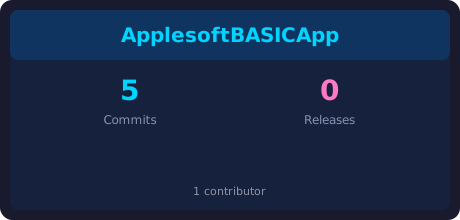
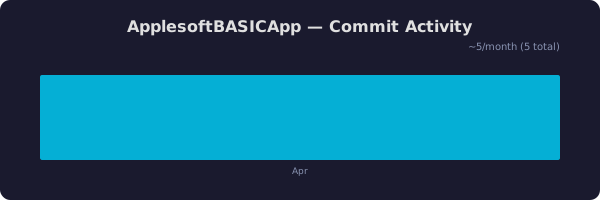
The project took shape across 5 commits between April 2 and April 3, 2026 — a compressed, decisive sprint that suggests a developer who had a clear picture of the goal before writing a single line. The Swift-based macOS application wraps an Applesoft BASIC interpreter in a native container, trading the sprawl of a full Apple II emulator for something tighter and more purpose-built.
Working in Swift reflects a deliberate platform commitment. Rather than reaching for a cross-platform framework or an Electron shell, the choice to build natively means the application earns its place in the dock — proper window management, system font rendering, and the kind of keyboard feel that matters when you’re typing 10 PRINT "HELLO" and pressing RUN.
Results
The project went from first commit to a working application in approximately ten hours of calendar time. With 5 commits across a single overnight session, the release represents a complete, intentional arc: conception to shipping artifact. The single-branch, single-contributor structure reflects focused solo execution rather than exploratory sprawl.
Judgment Calls
The most telling decision here is scope. A developer building an Applesoft BASIC environment faces a fork: emulate the whole machine, or isolate the language. Choosing the latter — a dedicated interpreter application rather than a full Apple II emulator — shows an understanding of what the experience is actually about. The language was the point. The cassette port was not.
Building in Swift rather than wrapping a web view or shipping an Electron application signals that the intended audience is someone who cares about the Mac as a platform, not just a screen. That’s a small but honest statement about craft: the tool should feel like it belongs where it lives.
The ten-hour genesis from empty repository to finished application also speaks to a working style — this is a developer who can hold an idea clearly enough to execute it without extensive scaffolding, design documentation, or iterative course correction. Sometimes the right process is simply knowing what you’re building and building it.

Tagged with: applesoftbasic, selfReflection