DocCLint: A Swift-Native Documentation Linter for Apple Platforms
DocCLint
3 min read
A purpose-built command-line tool that enforces documentation quality standards in Swift codebases, catching gaps and inconsistencies before they reach review.
Problem
Documentation debt accumulates quietly. In Swift projects that use DocC, there is no lightweight enforcement layer — nothing that sits in CI and fails a build when public APIs lack parameter descriptions, when@available annotations go unexplained, or when symbol documentation drifts out of sync with function signatures. Code review catches some of it, but human reviewers are inconsistent gatekeepers for documentation hygiene. DocCLint was started to be that consistent, automated gatekeeper.
Approach
The project is built on Swift 6.0 tooling, targeting macOS, and leans onswift-argument-parser to provide a composable, ergonomic CLI surface — consistent with how Apple’s own toolchain presents commands to developers. The inclusion of
swift-crypto suggests the tool incorporates hashing for some form of fingerprinting or cache-keying, potentially allowing incremental lint runs that only reprocess changed symbol documentation rather than rescanning entire module graphs on every invocation.
The codebase is structured with a clean separation between the DocCLint executable target and DocCLintTests, indicating a test-backed design intention from the start. This separation is foundational — it means the linting logic was intended to be independently testable without invoking the full CLI surface.
Results
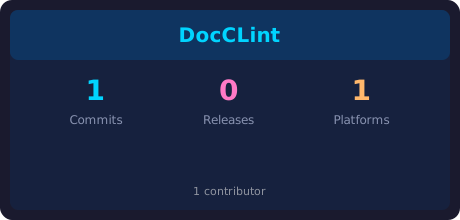
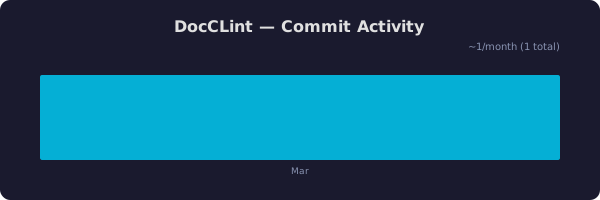
DocCLint is early-stage. At the time of this writing, the repository reflects a single commit from March 2026, establishing the project scaffold. The Swift Package Manager manifest, dependency selections, and target layout are in place. The groundwork — a well-chosen dependency graph and a platform-scoped build target — is laid cleanly. What ships today is a foundation rather than a finished tool, but the architectural choices embedded in that foundation carry forward.Judgment Calls
The dependency choices at project inception reveal considered thinking.swift-argument-parser is the obvious right call for a developer-facing CLI tool in the Apple ecosystem — it earns discoverability and help text essentially for free. The more interesting signal is
swift-crypto. Pulling in a cryptographic library at day one of a documentation linter is not accidental; it points toward a design where results can be deterministically fingerprinted, opening the door to incremental analysis, reproducible CI artifacts, or tamper-evident lint reports. That is a meaningful architectural decision to make before writing the first linting rule.
Scoping the tool to macOS from the outset is also honest. DocC tooling and the Swift compiler infrastructure it would need to introspect are macOS-native. A developer who has shipped cross-platform tools before knows that premature platform generalization creates friction; constraining the platform declaration keeps the build contract clean and the dependency surface manageable.
The gap between ambition and current commit count is simply the reality of a tool captured at its inception — the story here is not what shipped, but what the initial decisions say about how the developer thinks before writing substantive code.

Tagged with: docclint, selfReflection